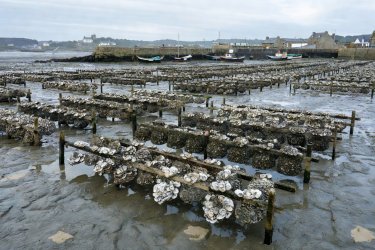
Brittany, France
READ PORT NOTES
Cancale
Dominated by the world's most dramatic tides in the Baie du Mont-Saint-Michel, yielding Belon flats and cupped oysters with mineral salinity.
The coastline of Europe is not merely a geographic frontier; it is an unbroken pantry sculpted by tidal amplitude, saltwater depth, continental currents, and centuries of dockside practical wisdom.
To understand European food, one must stand at the waterline where fishing boats unload before sunrise. In this editorial archive, we document the enduring connection between working maritime communities, dawn auctions, and dishes that refuse to exist in authentic form more than twenty kilometres inland.
Before a single stove is lit in a port tavern, the town converges at the municipal market. Understanding these spaces means learning to observe how ice melts, how auction callers modulate their pitch, and how daily availability dictates maritime cooking.
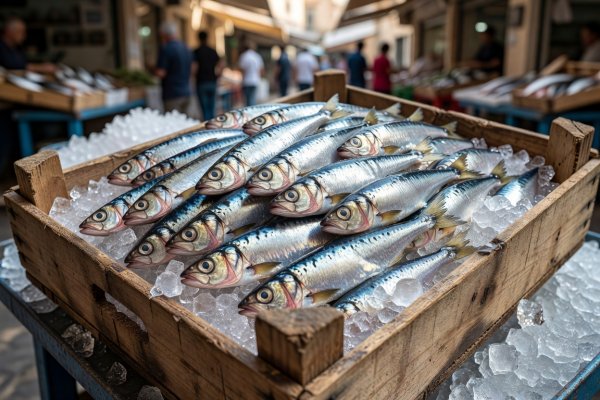
From the tidal stalls of Brittany to the marble counters of the Venetian lagoon, coastal markets preserve varieties that commercial supermarkets ignore: rockfish, cuttlefish carrying black ink, and tiny deep-water crabs.
Great seafood towns are distinguished by access to unique underwater topographies. Cold shelf waters, shallow estuaries, and underwater ravines shape the character of four distinct maritime epicentres:
Dominated by the world's most dramatic tides in the Baie du Mont-Saint-Michel, yielding Belon flats and cupped oysters with mineral salinity.
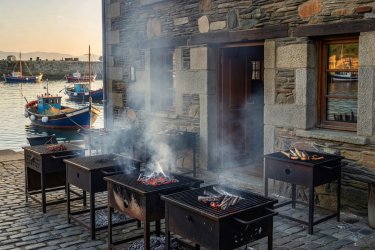
Charcoal parrillas burning outdoors, catching turbot caught in the Bay of Biscay's stormy depths and dressed only with vinegar and oil.
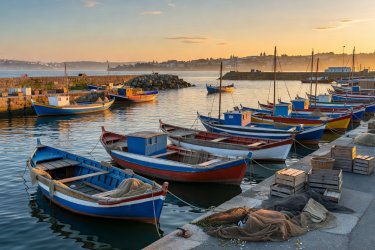
Where the Atlantic swells bring thick sardines and octopus, roasted directly over sea salt on street brazier coals behind the fish quay.
A genuine coastal recipe is never decorative; it is a thermal answer to fisherman survival and seasonal gluts. Every famous maritime stew or plate carries the imprint of local firewood, regional wines, and dockside necessities.
Far from luxury dining, bouillabaisse began as the unsellable portion: bony rascasse (scorpionfish), weaver fish, and conger eel boiled violently with saffron and wild fennel, served with garlicky rouille.
VIEW RECIPE CONTEXTAtlantic octopus simmered whole in beaten copper cauldrons, sliced with wooden scissors onto unvarnished pinewood platters, and showered with coarse salt and pimentón.
VIEW RECIPE CONTEXTEating well along Europe's coastline requires respecting unwritten laws: why dairy is excluded from southern seafood, when the shell bans fall across northern bays, and how to read handwritten blackboards instead of laminated multi-language menus.
From the Friday market schedules of Liguria to the Spanish closed-season (veda) preserving wild goose barnacles, timing your meal to the lunar and legal calendars ensures both ecological respect and peak culinary texture.
Explore our thematic investigations into European seaside eating, free from commercial placement or sponsored rankings.
In-depth surveys of Cancale, Getaria, Chioggia, Matosinhos, and Bergen. Why their geography creates unique seafood.
HARBOUR TOWNSA field guide to European fish auctions, retail stall protocols, and morning dock culture.
MARKET WALKSThe cultural origin of stews, raw preparations, charcoal grills, and preserved marine delicacies.
COASTAL DISHESAnswers to fundamental questions regarding seasonal availability, pricing structures, and coastal culinary habits.
The traditional French proverb stating oysters should only be eaten in months containing the letter "r" (September to April) stems from historic preservation concerns prior to refrigeration, as well as the wild oyster's summer spawning period when textures turn milky. Modern cold chains and triploid aquaculture allow year-round consumption, though wild oysters still peak during cold winter waters.
True fishermen stews like bouillabaisse, brodetto, or suquet de peix rely on the bycatch of the morning net. If scorpionfish was scarce, gurnard or monkfish heads take precedence. Homogeneous soups indicate industrial frozen bases rather than genuine harbour cooking.
We use cookies Essential cookies keep this site working. Optional ones help us see what is useful. You can change your choice at any time. Cookie policy