Recipes with a Coastline
No great coastal dish began as an indulgence for travelers. They originated as fuel for wet, exhausted fishermen attempting to transform bony discard, tough cephalopods, or fragile molluscs into sustaining sustenance using shipboard fires or dockside hearths.
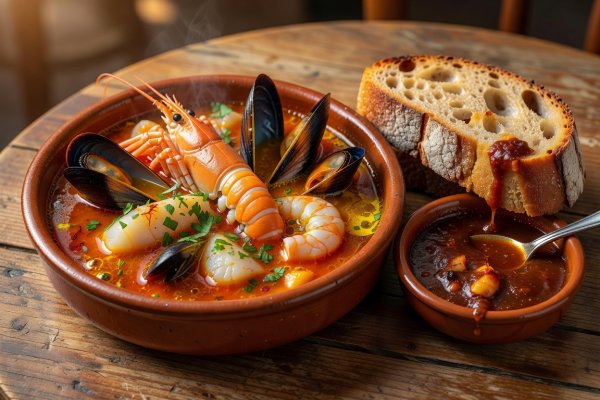
Bouillabaisse: The Violent Boil
The name itself explains the physical technique: bouillir (to boil) and abaisser (to lower the heat). Originating in the ancient Phoenician port of Massalia (Marseille), bouillabaisse requires boiling olive oil and sea water at high temperatures so they emulsify violently into a thick, opaque golden broth.
Authenticity rests on bony Mediterranean rockfish: rascasse rouge (red scorpionfish), vive (greater weever), grondin (gurnard), and fiélas (conger eel). It is served strictly in two separate courses: first the steaming saffron broth ladled over crusty baguette rubbed with raw garlic and slathered with rouille, followed by the carved fish presented on a warm platter.
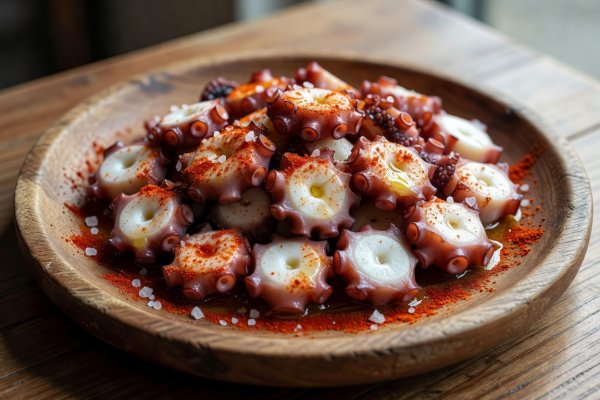
Polbo á Feira: The Copper Cauldron Masterpiece
Although synonymous with the Atlantic coast of Galicia, octopus cooking reached its zenith inland at cattle fairs (feiras) where livestock drovers traded with coastal hauliers. Octopus was dried, beaten against rocks, carried across mountain passes, and boiled in heavy hand-hammered copper pots.
The master cook ("pulpeira") dips the octopus three times by its head into boiling water to curl the tentacles before boiling it for precisely forty minutes, then allowing it to rest in its broth. It is cut into thick medallions, placed on a round wooden board that absorbs excess steam, drenched in extra virgin olive oil, and sprinkled heavily with coarse flake salt and pimentón (sweet and smoky paprika).
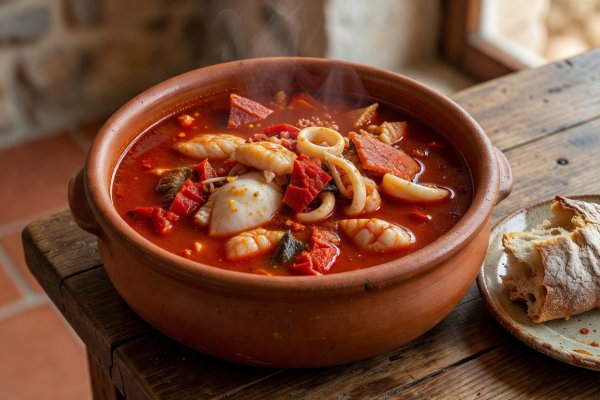
Brodetto: The Acid Balance of the Shallows
The shallow, sandy Adriatic seabed yields small mantis shrimp (canocchie), cuttlefish, mullet, and dogfish. Unlike western Mediterranean fish stews which lean on fennel and orange peel, the Adriatic brodetto (especially around Fano, Ancona, and Vasto) relies on white wine vinegar.
The acidity cuts through the fatty richness of the smaller fish. A traditional brodetto must never be stirred with a spoon; instead, the terracotta pan is gently swirled by its handles so delicate fillets remain intact while melting into the tomato and garlic base.
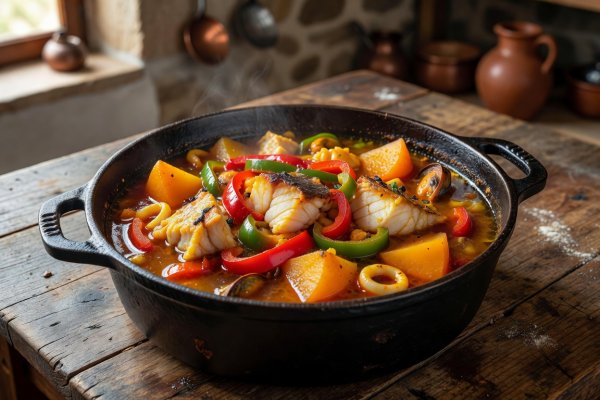
Caldeirada: Layered Atlantic Simmer
From Nazaré down to the Algarve, caldeirada represents the fisherman's communal shipboard lunch. Unlike strained soups, caldeirada is an unhurried layered casserole: sliced potatoes, sweet onions, ripe tomatoes, and bell peppers layered alternately with firm-fleshed fish like ray, dogfish, and conger eel.
Moistened with a splash of white wine, piripiri chili, and coriander stems, the pot is sealed tight. The potatoes soak up the gelatinous fish stock, creating a rich stew eaten directly from deep bowls with crusty Portuguese bread.
Comparative Analysis of Coastal Soups
A reference breakdown comparing foundational broths, required aromatic bases, and primary starch pairings across Europe.
| Recipe | Vessel | Aromatic Base | Core Seafood Group | Required Starch |
|---|---|---|---|---|
| Bouillabaisse (France) | Wide copper marmite | Fennel, orange peel, saffron, garlic | Rascasse, weaver, conger, gurnard | Toasted baguette with rouille |
| Suquet de Peix (Catalonia) | Clay cazuela | Picada (almonds, fried bread, garlic) | Monkfish, rockfish, scampi, mussels | Sliced potato simmered in stock |
| Brodetto Vasto (Italy) | Terracotta tegame | Garlic, sweet green peppers, vinegar | Mantis shrimp, cuttlefish, mullet | Slices of grilled rustic bread |
| Cullen Skink (Scotland) | Heavy iron saucepan | Butter, leeks, white pepper | Cold-smoked Finnan haddie | Mashed or diced waxy potatoes |
| Kakavia (Greece) | Deep cauldrons | Wild mountain herbs, onion, lemon | Rock scorpionfish, red mullet, bream | Twice-baked barley rusks |